Amazon A+ content is the visual section below the fold on a product page — image modules at Amazon's exact sizes that replace the wall of plain text. Every KDP author can add it free from the KDP dashboard, and Amazon's own guidance credits it with a measurable sales lift. Here is every module and its exact size, what good A+ design does for a book, and how to get modules built from your actual manuscript instead of a generic template.
Amazon rejects images at the wrong dimensions, so design starts with the spec. These are the standard A+ modules available to KDP authors (up to five modules per book page):
Design rules that survive contact with real shoppers: build for mobile first (most Amazon book browsing happens on a phone, where 970-wide banners shrink to palm size), keep overlay text large and short, and make every module look like it belongs to the same book — same palette, same type, cover-consistent.
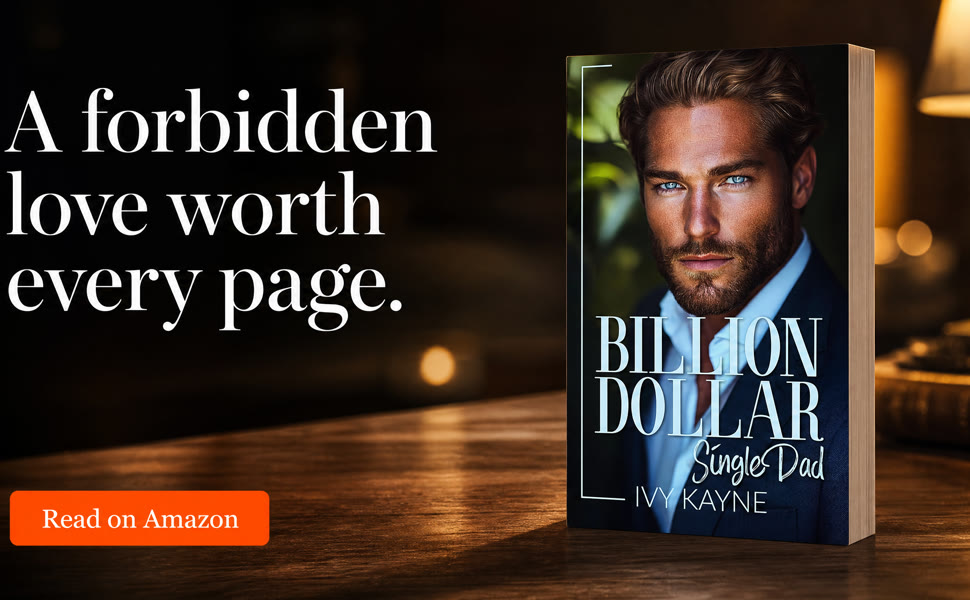
These are real A+ modules — header, banner and tile — generated from the manuscript of one of our own pen-name books, at Amazon's exact sizes. Not a template with stock photos dropped in: the scenes, the characters and the lines all come from the actual book.
Canva has A+ templates at the right sizes, and for a designer-author with good stock images and an afternoon, they work. The limit is the source material: templates are generic frames, so most template A+ ends up as the same beach-and-serif look every other book has — and nothing in it comes from your story.
A good freelancer produces polished modules, typically in days and at per-project rates. Quality tracks the brief you write: the designer hasn't read your book, so you supply the scenes, the quotes and the mood — or you get generic-pretty.
Free, and fine for a plain header with your cover art. The trap is the spec (wrong sizes get rejected) and the time — six modules at six different dimensions is a real design project, repeated for every book in the series.
We read the actual manuscript, then generate the module set from it — characters, scenes and hook lines from the book, sized to Amazon's spec, upload-ready. It ships inside the same pack as the ad creative, so the ad a reader clicks and the page they land on tell one story.
A+ content is the "From the Publisher" visual section on a product page — image and text modules that appear below your book's blurb. For books it typically carries the mood of the story, the series lineup, review pull-quotes and character art, doing the selling the plain-text blurb can't.
Yes. Every KDP author can add standard A+ content free: KDP dashboard → Marketing → A+ Content. You don't need Brand Registry (that's the path for non-KDP sellers). Premium A+ is a separate program aimed at vendors and isn't the KDP author path.
Each module has its own spec: the Image Header with Text is 970×600 px, Single Image & Sidebar is 300×400 plus 350×175, Three Images & Text is 300×300 each, the Four Image Quadrant is 220×220 each, Comparison Chart images are 150×300, and the logo module is 600×180. Amazon rejects wrong-sized uploads, so build to spec from the start.
Amazon's own published guidance credits basic A+ content with a sales lift of up to around 8%. For advertised books the effect compounds: A+ makes the product page keep the promise the ad made, which is where paid clicks are otherwise lost. It's the cheapest conversion upgrade a book page can get.
Yes — Canva has correctly sized A+ templates, and they're a fair DIY route if you have strong images of your own. What a template can't supply is material from your actual book; that's the difference between decoration and selling. If your A+ could sit on any book's page, it isn't working.
Sponsored Products, keywords, ACOS — and why A+ content is what makes the click convert.
Read the guide →The six-step setup and the launch-week timeline, step by step.
Read the guide →On-book images at feed sizes — the other half of a cover-consistent campaign.
Read the guide →Book Ad Pack is not a template library. Every pack is generated from the manuscript and checked against a reader-demand database we build and count ourselves: 725,746 hook mentions pulled from reader reviews, 5,344 reader personas, and 271,339 Amazon rank and price snapshots. The pipeline has built 76 complete packs across 13 subgenres, 53 of them on paid orders, including 255 ad creatives and 64 scene videos. Counts are live table counts taken 25 August 2026; they go up, not down. Compared with pinterest.com, which ranks first for “amazon a+ content design”: Pinterest shows you other people’s A+ panels for inspiration. We have built 67 Amazon A+ modules (166 sized images) from authors’ actual books, each checked against the counts above. See how we compare with Canva, Placeit and BookBrush.
Upload the manuscript or paste your Amazon link — we read the actual book, then show you the plan.