Kindle Unlimited Promotion: How KU Really Works for Indie Authors
Promotion, honestly

Kindle Unlimited promotion, without the myths.

The short answer: there is no Kindle Unlimited promotion you can buy from Amazon. KU is a subscription readers pay for. What you can promote is a book you have enrolled in KDP Select, using the two tools that enrolment unlocks — free days and a Countdown Deal — plus outside promo lists and ads that point readers at the page. Below is how that actually plays out, including the trade-off you make to be there at all.

First, the shape of it

What you are actually promoting.

Almost every confused question about “KU promotion” comes from mixing up four separate things. Untangled:

Kindle Unlimited is a reader subscriptionReaders pay Amazon a monthly fee and borrow as many enrolled titles as they like. They are not buying your book, and one more borrow costs them nothing. That is the whole reason KU works for unknown authors: the barrier to trying you is close to zero.
KDP Select is the author sideEnrolling the Kindle edition in KDP Select is what puts it into Kindle Unlimited. Terms run in 90-day blocks and renew automatically unless you switch that off before the term ends.
Exclusivity is the price of entryWhile the book is enrolled, the digital edition has to be exclusive to Amazon — no Kobo, Apple Books, Nook or Google Play, and you cannot sell the ebook from your own site. Paperback, hardback and audio are not restricted.
You are paid for pages readA borrow on its own pays nothing. Amazon counts pages read in a normalised unit (KENP) and pays out of a monthly pot called the KDP Select Global Fund. A reader who borrows and never opens the book earns you nothing at all.
The two built-in tools

Free days, or a Countdown Deal.

Enrolment gives you two promotional levers inside Amazon. They do different jobs and they suit different books.

Free Book Promotion

What it is: you set the ebook to $0.00 for up to five days in each 90-day term. Best for: book one of a series that is already finished, where the read-through pays for the giveaway. The catch: free downloads are not sales, they rank in a separate free chart, and when the promo ends the book has to climb back into the paid chart from a standing start. A free run with no list and no ads behind it usually moves very little.

Kindle Countdown Deal

What it is: a timed discount with a visible countdown clock on the product page, up to seven days per term, run on Amazon.com and Amazon.co.uk. Best for: a book that already has reviews, where the discount is a nudge rather than a first introduction. The catch: eligibility depends on the price you have been charging and how long the book has been enrolled — Amazon requires the title to have sat in the 70% royalty band for a qualifying period first.

Check before you plan. Amazon changes the eligibility rules for both tools, and they differ by marketplace. Read the current KDP Select terms page before you build a launch calendar around either one.

The maths nobody shows you

What a borrow is worth.

The per-page rate is not fixed. Amazon divides the Global Fund by every KENP page read that month, so your rate depends on how much everyone else was read. It has commonly landed somewhere around half a US cent per page, and Amazon publishes the actual figure each month. Run the sum yourself with the current number:

 A $4.99 saleA full KU read (400 KENP)
What you earnAbout $3.49 at the 70% rateAbout $1.80 at half a cent a page
What it costs the reader$4.99Nothing beyond the subscription they already pay
Barrier to trying youHigh for an unknown authorClose to zero
If they finish it at midnightThey have to decide to buy book twoThey borrow book two immediately
If they abandon it at 20%You keep the full royaltyYou earn roughly a fifth

Illustrative only, using a round 400-page KENP count and a round half-cent rate. Both numbers move. The point is the shape, not the cents: a KU read pays roughly half a sale, and buys you a reader who would probably never have paid full price to find out.

This is why series authors do disproportionately well in KU. One decision to borrow book one turns into four or five books of page reads over a weekend, with no second purchase decision in the way. It is also why a standalone in KU can feel like it earns nothing: there is no read-through to compound. If you write standalones and you have a real presence on Kobo or Apple, exclusivity is a genuinely hard trade — not an obvious yes.

The outside lists

Where a promo actually comes from.

Amazon will not promote you on request. Everything authors call a “KU promotion” is really outside traffic pointed at a page where borrowing is free. These are the honest options, biggest first:

BookBub Featured Deal

The largest reader lists in the business, and editorially selected — most applications are declined, and being declined says nothing about your book. Applying costs nothing; a featured slot is priced by genre and list size and commonly runs from the low hundreds of dollars into four figures for the biggest lists. When it lands, nothing else compares. You cannot plan around it, because you cannot book it.

Freebooksy and Bargain Booksy

Both from Written Word Media, and bookable rather than editorial: you pick the genre list and the date, and you are in. Freebooksy for a free run, Bargain Booksy for a discounted one. Commonly runs from the tens into the low hundreds of dollars depending on the genre list. Smaller reach than BookBub, but you can build a calendar on it, which matters more than most authors expect.

The smaller promo sites

There are dozens, with real but modest lists. The honest way to use them is stacking: book four or five on the same day rather than expecting one to carry a launch. Track what each one returns; the difference between a site that works for your genre and one that does not is large, and only your own numbers will tell you which is which.

Your own list, swaps, and ads

Your newsletter is free and the most responsive audience you will ever have — a newsletter swap with an author in your subgenre costs nothing but a return favour. Amazon Ads and Meta ads are the only levers you control day to day; they do not need a promo window to work, but clicks cost more when everyone is promoting at once. See Amazon ads for authors and Facebook ads for a book launch.

Prices change constantly and vary by genre; the bands above are what these services have commonly charged and are for orientation, not quotes. Check each vendor’s current rate card before you book.

Making it hold

Stacking a promo so the rank does not collapse.

1

Book the list first

Dates drive everything else. Freebooksy and the smaller sites fill weeks ahead in busy genres, so secure the slot, then set your free days or Countdown Deal to match it, then plan the ads around that date.

2

Put your own audience on day one

Newsletter and swaps go out the morning the promo starts, so the first spike is yours and the paid traffic lands on a book that is already climbing. A book at rank 900 converts better than the same book at rank 90,000 — readers can see the difference.

3

Keep ads running through the tail

The rank you bought on day one decays over roughly a week. Ad spend across days two to five is what turns a one-day spike into a plateau, and the plateau is where the also-boughts and the category placements actually form.

Where we fit

We do not run promos. We make what runs in them.

We have no reader list, we do not book slots, and we never touch your ad account or your KDP dashboard. Every promo above has the same unglamorous requirement: something to show. An image, a short video, a hook line — and for most authors that is exactly the bit that stalls, because the cover is the only asset that exists.

That is our slot. We read the manuscript and build the creative out of it: on-book images with your real cover staged in the story’s own settings, short scene video, ad copy and hook lines taken from actual scenes, and Amazon A+ modules — delivered sized for Meta and Amazon, for you to run from your own accounts. Priced per book, not per month: packages and pricing.
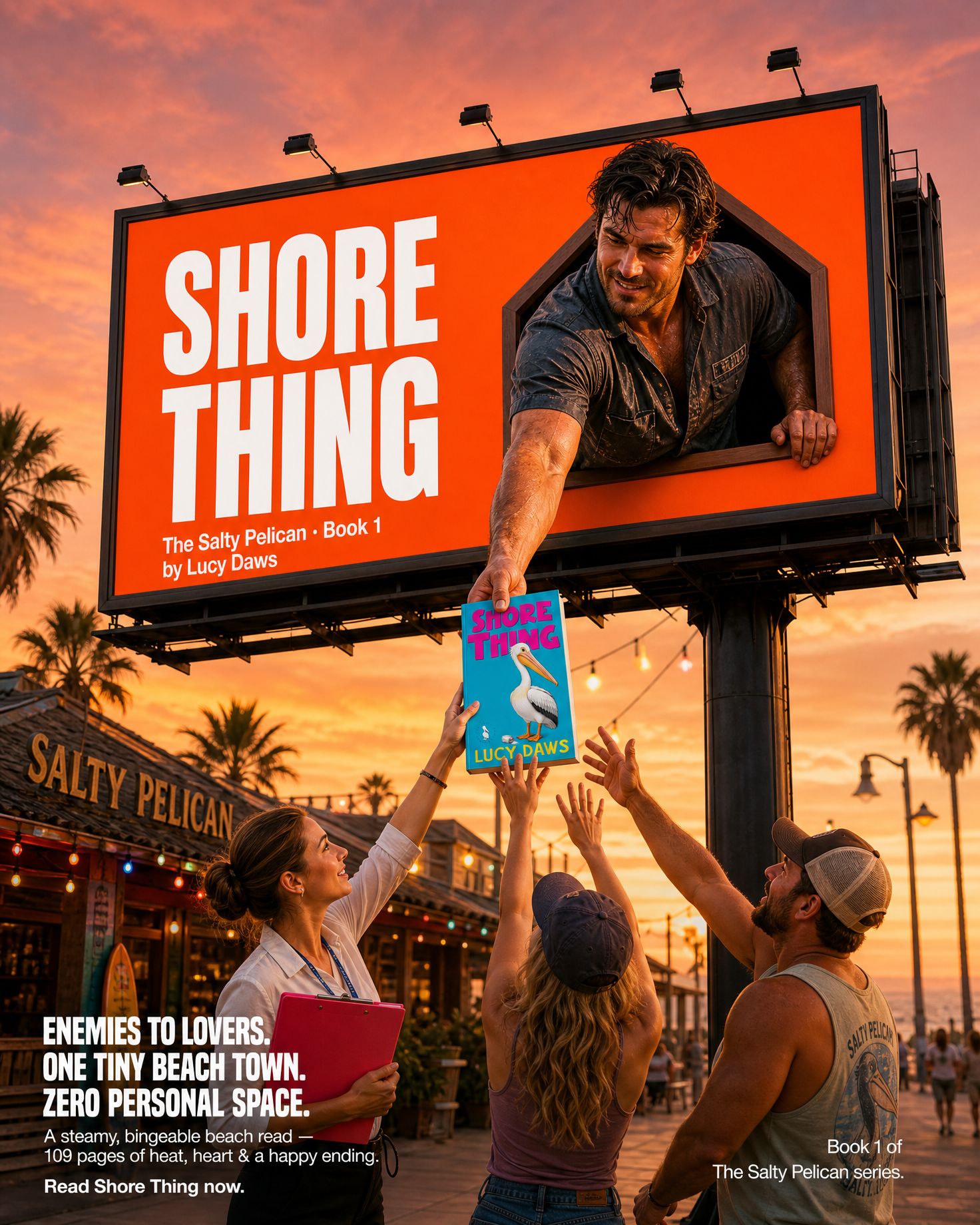

On-book ad image built from a manuscript, sized for a Kindle Unlimited promotion Book cover staged in a scene from the story, for promo-day advertising Ad creative generated from a pen-name manuscript for a promo stack
What a promo has to point at: on-book images from one of our own pen-name manuscripts. The settings are the book’s own, not a stock library.
Where our numbers come from

Counted, not claimed.

Why this comes from real data

Book Ad Pack is not a template library. Every pack is generated from the manuscript and checked against a reader-demand database we build and count ourselves: 725,746 hook mentions pulled from reader reviews, 5,344 reader personas, and 271,339 Amazon rank and price snapshots. The pipeline has built 76 complete packs across 13 subgenres, 53 of them on paid orders, including 255 ad creatives and 64 scene videos. Counts are live table counts taken 25 August 2026; they go up, not down. Compared with BookBub, Freebooksy and the other promo services named on this page: they own the reader lists and put your discount in front of them, which is a job we do not do and do not claim to. Ours is the creative that runs alongside the promo — the image, the video and the hook line, all taken from your book and scored against those 725,746 hook mentions. See how we compare with Canva and Placeit.

Fair questions

Kindle Unlimited, asked often.

Does Amazon promote books that are in Kindle Unlimited?

Not on request. Amazon surfaces KU titles through its own recommendation systems, and enrolment makes you eligible for that, but there is no promotion you can apply for or buy. The two tools you control are a Free Book Promotion (up to five days per 90-day term) and a Kindle Countdown Deal (up to seven days per term on Amazon.com and Amazon.co.uk). Everything else described as a “KU promotion” is outside traffic — promo sites, your newsletter, or ads — pointed at your page.

How much does Kindle Unlimited pay per page?

There is no fixed rate. Amazon divides the monthly KDP Select Global Fund by every normalised page (KENP) read that month, so the rate moves with total reading volume. It has commonly landed near half a US cent per page, and Amazon publishes the actual figure each month. A 400-page KENP novel read in full therefore earns roughly a couple of dollars — about half what the same book earns as a $4.99 sale.

Is KDP Select worth the exclusivity?

It depends on two things: whether you write series, and whether you already sell anywhere else. Series authors usually win, because one borrow decision turns into several books of page reads with no second purchase in the way. Standalone authors, and anyone with a real audience on Kobo, Apple Books or in libraries, are giving up income that already exists for income that might not appear. Enrolment runs in 90-day terms, so it is a testable decision rather than a permanent one — run a term, measure it, and switch off auto-renew if it did not pay.

Free days or a Countdown Deal — which should I use?

Free days suit book one of a finished series, where you are buying readers and the read-through pays you back. A Countdown Deal suits a book that already has reviews and a price history, where a visible discount nudges a reader who was already considering it. If a book has no reviews and no series behind it, neither promotion will fix that; get the cover, blurb and first reviews right first.

Do I need to pay a promo site to run a KU promotion?

No. Your own newsletter and a couple of newsletter swaps cost nothing and are usually your most responsive audience. Paid lists like Freebooksy or a BookBub Featured Deal add reach you do not have yet, which is worth paying for once your own list is exhausted. What you should not do is book a paid list without something to show — the slot puts readers in front of your cover and hook, and if those are weak the traffic simply passes through.

Keep reading

More on selling your book.

Your book next

Give the promo something to show.

Upload the manuscript or paste your Amazon link — we read the actual book, then show you what it can become before you commit to anything. You keep your own KDP dashboard and your own ad accounts.